
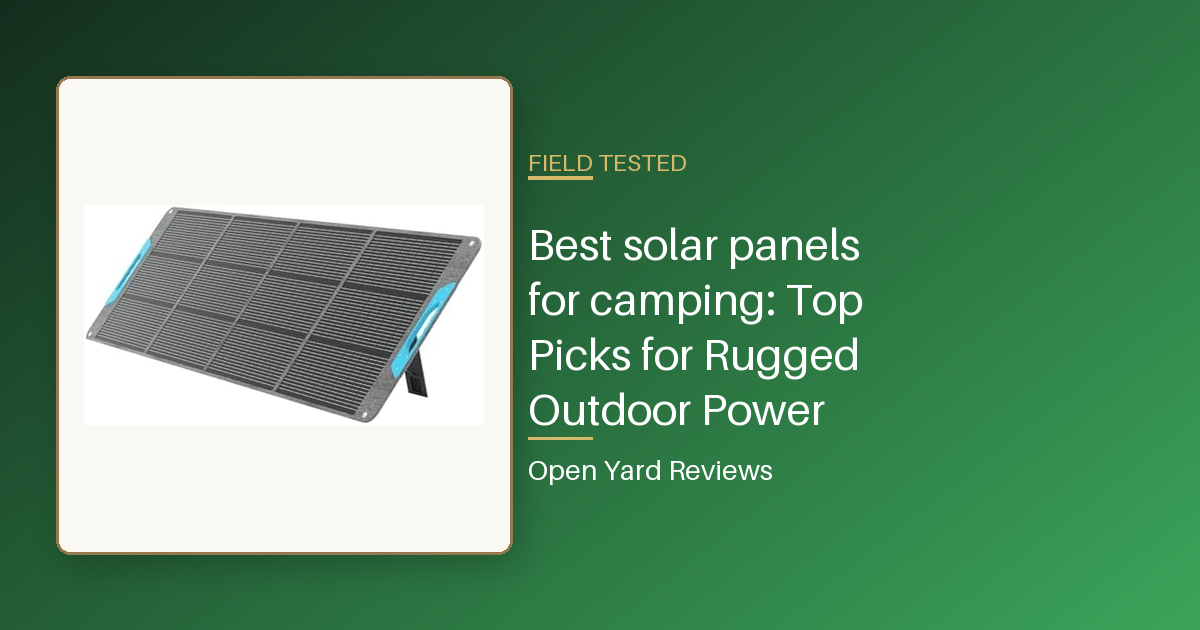
Choosing the right solar panel for camping can mean the difference between a powered-up site and scrambling for outlets or backup batteries. Campers who rely on electronics, run mini-fridges, or charge power stations need a panel that delivers steady output and stands up to tough conditions.
This guide is built for campers, backpackers, and RV owners who want portable, durable solar panels that perform in real-world settings. It covers panels from lightweight, device-charging models to heavy-duty units for power-hungry setups.
Every panel here was evaluated for output, packability, setup, and reliability under outdoor use. The winner stands out for its consistent wattage, durable build, and easy transport.
Scan the key takeaways, compare specs, and read the buying guide to avoid common mistakes. FAQs tackle the practical questions most buyers ask before heading out.
Our overall best pick: Renogy 200W Portable Solar Panel for Power Stations →
| Product | Wattage | Efficiency | Weight | Dimensions | |
|---|---|---|---|---|---|
| Renogy 200W Portable Solar Panel for Power Stations | 200W | 25% | 13.89 lbs | 23.72 x 22.99 x 1.97 in (folded) | See on Amazon |
| FlexSolar 100W Foldable Portable Solar Panel Charger IP67 | 100W | 23% | 4.1 lbs | 12.99 x 10.43 x 2.17 in (folded) | See on Amazon |
| BougeRV 200W Portable Solar Panel | 200W | 25% | Not specified | Not specified | See on Amazon |
| 110W Portable Solar Panel,Foldable Solar | 110W | 23.5% | 4.5 kg | Not specified | See on Amazon |
| HQST 200W Portable Solar Panel | 200W | 25% | Not specified | 1.97 in thick (folded) | See on Amazon |
Renogy 200W Portable Solar Panel for Power Stations
Renogy’s 200W panel consistently hits 160-181 watts in direct sun, rivaling rigid panels and outperforming most foldables. The 25% efficiency is evident in real use, charging a 10k power bank, laptops, and large power stations without lag.
It works well even in partial shade, but any shadow sharply drops output due to cell design. Setup is fast, and the magnetic handle simplifies storage for cramped camper spaces or SUV trunks.
The build is solid, not flimsy, and the panel weighs just under 14 pounds, the lightest in its class. It folds to backpack size and fits easily in tight spaces.
USB-C and USB-A ports let you charge three devices simultaneously, and MC4 output covers power stations and 12V batteries. Kickstands adjust for optimal sun angles, but legs can be finicky in strong winds.
No carrying case, but the accessory pouch keeps cables handy. Drawbacks include occasional output below 100W (even in ideal sun), mainly due to panel orientation or series wiring.
The legs feel “janky” in rough weather and the travel bag is basic. Still, most campers report the panel as tough, reliable, and a strong value for high-output needs.
Holds up
- Delivers up to 181 watts in direct sun, near rated output
- 25% efficiency yields more power in small footprint
- Weighs only 13.89 lbs, easy to carry and store
- Charges three devices simultaneously via USB-C and USB-A
- Solid build, withstands frequent setup and transport
- Works reliably in overcast or low light conditions
Watch for
- Kickstand legs can be unstable in wind
- Output drops sharply with any shadow
- Basic travel bag, no padded case
FlexSolar 100W Foldable Portable Solar Panel Charger IP67
FlexSolar’s 100W panel stands out for its featherweight 4.1 lbs and notebook-sized fold, making it ideal for hiking or air travel. It delivers up to 80 watts in direct sun, and typically stays between 60-70W through most daylight hours.
The panel charges phones, power banks, and small devices quickly via USB-A and USB-C, though output drops sharply with partial shading. The included carry bag is well-padded, fits cables and panels snugly, and the construction is sturdy, no flimsy nylon.
Integrated carabiners let you hang the panel for optimal sunlight, and the E-Film lamination ensures durability. It packs smaller than most 100W competitors, allowing easy transport in duffle bags for fly-in camping or hiking trips.
The main downside is the USB power connector: it corrodes if exposed to rain and needs regular cleaning. Total output rarely hits 100W, especially in valleys or low sun angles.
Long-term durability is unproven, but so far the design holds up to rough use.
Holds up
- Weighs only 4.1 lbs, folds to notebook size
- Delivers 60-80 watts in direct sun
- Charges multiple devices quickly via USB-A and USB-C
- Carry bag is padded and fits everything neatly
- Rugged E-Film lamination, withstands rough handling
- Easy to hang for optimal sunlight
Watch for
- USB connector corrodes in wet conditions, requires cleaning
- Output drops sharply with any panel shading
- Rarely reaches full 100W output
BougeRV 200W Portable Solar Panel
BougeRV’s foldable 200W panel consistently delivers 170-186 watts in direct sunlight, with occasional peaks near 190W. Its N-type cell technology yields 25% conversion efficiency, matching premium competitors.
The fiberglass-reinforced construction resists impact and abrasion, standing up to repeated setup and transport. Setup is straightforward, and the built-in handles make it easy to carry between campsites.
Tilt panels are a bit flimsy, but overall build quality is solid and the unit stores compactly. The panel includes an XT60 adapter and an 8.2 ft extension cable, allowing flexible placement between sun and power station.
Campers in sunny climates report strong continuous output and reliable performance for topping off power banks or running appliances. Drawbacks include tilt panels that feel unstable in wind and occasional output drops to 144-147W, sometimes tied to connector limitations.
While IP65 water resistance helps, it isn’t built for long-term rain exposure. Still, the panel is a standout for durability and high output.
Holds up
- Delivers up to 186-190 watts in direct sun
- Fiberglass layer resists cracking and abrasion
- Stores small, folds easily for transport
- Includes XT60 adapter and 8.2 ft extension cable
- 25% efficiency matches premium panels
- Built-in handles for easy carrying
Watch for
- Tilt panels are flimsy, unstable in wind
- Output occasionally drops below rated, especially with adapter
- Not suited for extended rain exposure
110W Portable Solar Panel,Foldable Solar
This 110W bifold panel weighs just 4.5 kg and sets up in seconds, thanks to straightforward kickstands. Typical output hits 105 watts in full sun, and it charges backup batteries in 3-4 hours under optimal conditions.
It folds compactly for transport and appears sturdy enough for regular use, though after months the finish starts to flake and charge rates can drop. The panel is IP67 rated, so it handles rain and dust well.
Thickened handles make it comfortable to carry, and cables for Anderson, XT60, and DC connectors are included. It works reliably with EcoFlow power banks, and the charging status is easy to monitor.
The panel performs better than conventional models in variable weather but is most effective in bright sunlight. Main complaints center on declining performance over time and the finish flaking off.
Charging slows in winter or cloudy conditions, and some power stations limit input, capping possible wattage. Still, it’s a solid choice for light-duty outdoor use.
Holds up
- Delivers up to 105 watts in perfect conditions
- Easy to set up and adjust for sun angle
- IP67 waterproof and dustproof
- Lightweight at 4.5 kg, folds for easy transport
- Thickened handles for comfortable carrying
- Works well with EcoFlow and other power banks
Watch for
- Finish flakes with months of use
- Performance drops over time
- Some power stations cap input below 110W
HQST 200W Portable Solar Panel
HQST’s 200W panel features next-gen N-Type cells with 25% efficiency, promising high output and fast charging in any conditions. It’s 37% lighter than typical 200W panels, folds to just 1.97 in thick, and includes built-in buckles for one-handed carry.
The 4.9 ft 3-in-1 cable allows connection to most major power stations, including Jackery, EcoFlow, Bluetti, and Anker. Two adjustable kickstands keep the panel stable on uneven ground, and the rigid design prevents collapse.
IP67 waterproofing and a PVDF-coated outer layer guard against rain, scratches, and wear, making it suited for tough outdoor use and frequent transport. Setup is fast, and compatibility with series or parallel connections benefits advanced users.
There’s no review data on real-world wattage or long-term performance, so actual output and durability remain unproven. The 12-month limited warranty and lifetime support provide some peace of mind, but buyers seeking tested reliability should look elsewhere or wait for more field reports.
Holds up
- 37% lighter than most 200W panels
- 25% efficiency N-Type cells
- Wide compatibility via 3-in-1 adapter cable
- IP67 waterproof with PVDF coating
- Rigid design for stable setup
Watch for
- No real-world output data available
- Long-term durability untested
- Warranty is only 12 months
1.Wattage and Output
Choose a panel wattage that matches your power needs. For charging phones and small devices, 100W is enough. If you plan to run a fridge or charge a large power station, go for 200W or more. Avoid panels that overpromise wattage but deliver less in real sunlight.
2.Efficiency
Higher efficiency means more power from less space. Panels with 23-25% efficiency convert sunlight better, especially on cloudy days. Don’t settle for low-efficiency panels that take up more room and weigh you down.
3.Portability
A good camping panel folds down small and weighs under 20 lbs. Look for sturdy handles and easy-to-pack designs. Heavy, bulky panels are a pain to carry and set up, especially for solo campers or backpackers.
4.Durability
Outdoor panels need tough frames and waterproofing. IP67 or fiberglass builds resist rain, dust, and drops. Cheap materials crack or corrode after a few trips, so check for proven toughness and real-world feedback.
5.Compatibility
Make sure the panel connects easily to your power station, battery, or devices. Universal connectors and adapters save headaches. Avoid panels with limited plug options that force you to buy extra gear.