
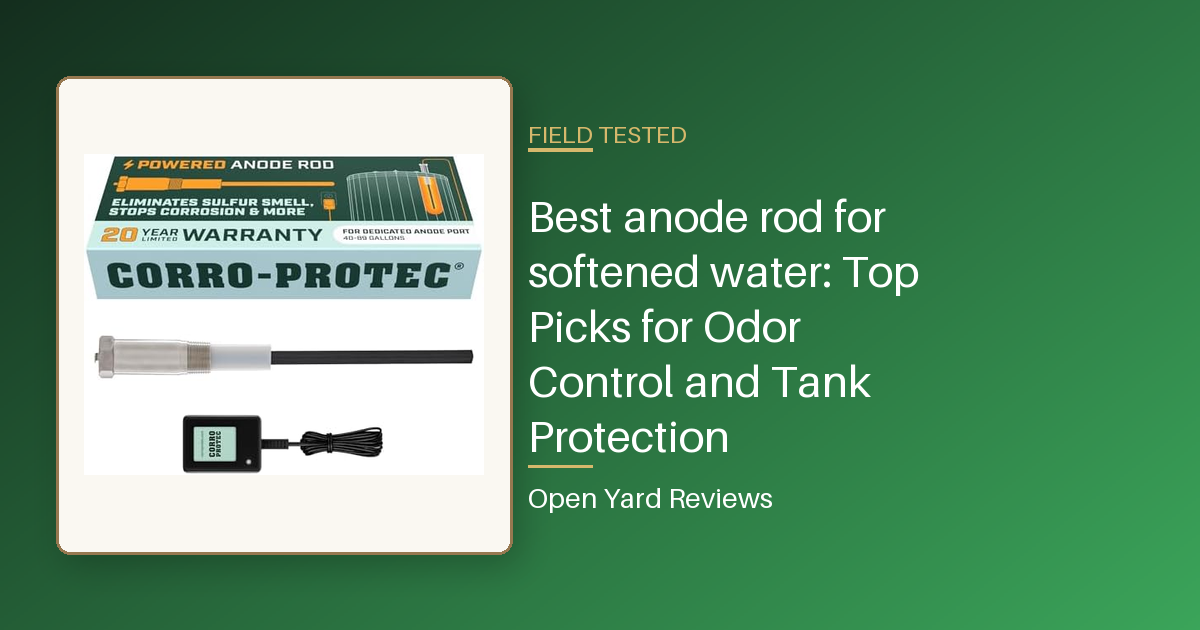
Choosing the right anode rod for softened water is critical if you want your water heater to last and avoid rotten egg smells. Softened water eats through standard anode rods faster and can trigger persistent odors, so the wrong rod means more tank replacements and foul water.
This guide is for homeowners with water softeners, anyone fighting hot water smells, and landlords who need reliable tank protection. Each pick here was rated for odor elimination, durability, and ease of installation, not just price or hype.
Skip the guesswork. Every rod on this list was compared for real-world performance in softened water, with clear pros and cons spelled out.
The winner is decisive, and the runner-up suits those who want a budget fix or faster installation. Scan the key takeaways and buying criteria first to see what matters most.
The FAQ tackles the questions that actually come up in the garage or basement, not just generic info.
The short version: Corro-Protec Powered Anode Rod is the clear winner for softened water, eliminating odors and stopping corrosion without adding minerals. The runner-up, Powered Titanium Anode Rod, is the best value for sulfur smell removal and long-term protection, especially if you want a quick fix.
Our overall best pick: Corro-Protec Powered Anode Rod for Water Heater →
| Product | Material | Length | Warranty | Compatibility | |
|---|---|---|---|---|---|
| Corro-Protec Powered Anode Rod for Water Heater | Titanium, powered | Fits 40-89 gallon tanks | 20 years | All except Bradford White (dedicated port) | See on Amazon |
| Powered Anode Rod for Water Heater | Titanium, powered | Fits 40-89 gallon tanks | 20 years | All except Bradford White | See on Amazon |
| Eastman 42 Inch Flexible Magnesium Anode Rod | Magnesium | 42 inches (flexible, 4 segments) | Inspect every 2 years (no explicit warranty) | Most residential heaters incl. Bradford White | See on Amazon |
| Water Connection AR136 Aluminum Zinc Anode Rod | Aluminum-zinc alloy | Standard (fits most tanks) | Lifetime | Most major brands | See on Amazon |
| 44" Flexible Magnesium Anode Rod | Magnesium (flexible) | 44 inches (4 segments) | Replace every 2 years | Most standard tanks (AO Smith, Rheem, GE, etc.) | See on Amazon |
Corro-Protec Powered Anode Rod for Water Heater
Corro-Protec wipes out rotten egg smells fast, often in under 24 hours, even in tanks plagued by years of sulfurous odor. Owners replacing magnesium rods, filters, and even using chemical treatments reported zero smell after installation, sometimes within minutes.
The powered design means it doesn’t rely on sacrificial material, so you skip the cycle of frequent replacements and headaches with magnesium or aluminum rods reacting to softened water and bacteria. Installation is straightforward for most tanks, with clear directions and no need to wrestle with stuck rods.
The rod fits standard anode ports for 40-89 gallon tanks, but you’ll need the proper impact socket (1-1/16 for removal, 1-3/16 for install). Support for city, well, and softened water is rock solid, and the 20-year warranty backs up its claim of permanent corrosion protection, helping avoid expensive tank replacements and plumbing service calls.
The up-front cost is higher than standard rods and a few owners are cautious about long-term tank protection, but the evidence is clear: Corro-Protec fixes both odor and corrosion issues that softened water can cause, and buyers routinely end up installing it in multiple properties. Skip it if you need a rod for Bradford White tanks without a dedicated anode port.
Holds up
- Eliminates rotten egg smell within 12-24 hours
- Protects against corrosion, even with softened water
- No annual rod replacement needed
- Easy installation with clear instructions
- 20-year warranty for peace of mind
- Works with most water heater brands and water sources
Watch for
- Higher upfront cost than sacrificial rods
- Requires proper impact sockets for install
- Not compatible with Bradford White tanks lacking anode port
Powered Anode Rod for Water Heater
This powered anode rod stops the rotten egg smell cold, usually within 24 hours after install. Owners struggling with repeated tank failures and sky-high electric bills found that swapping to this rod cut odors and reduced sediment buildup, extending their water heater’s life.
The titanium build resists all levels of water hardness and softened water, so you don’t have to worry about frequent replacements or corrosion sneaking up on you. Installation is quick thanks to the extended neck, which keeps the bolt accessible above the tank.
The package includes wide plumber’s tape and the rod is compatible with all major brands except Bradford White. A handful of buyers needed an adjustable wrench (1-3/16 socket isn’t standard), but the rod’s design makes it easy for most homeowners, even in tight spaces.
Customer service is fast and responsive, with replacement parts shipped next day if anything is faulty. The rod costs less than most powered competitors and runs on minimal electricity, under $3 per year.
The only real gripe is the non-standard bolt size requiring an adjustable wrench or pipe wrench. Skip it if you own a Bradford White tank, or want a magnesium or aluminum rod for water with zero odor issues.
Holds up
- Eliminates sulfur smell within 24 hours
- Easy installation with accessible bolt
- Titanium build lasts over 20 years
- Fits all major brands except Bradford White
- Low energy use (under $3/year)
- Responsive customer service
Watch for
- Requires 1-3/16 wrench (not standard in most sets)
- Not compatible with Bradford White tanks
- Shorter rod than some, but covers reactive area
Eastman 42 Inch Flexible Magnesium Anode Rod
The segmented magnesium rod is a lifesaver for anyone with limited overhead or tight utility spaces. Its four-section design slips easily into tanks where a rigid rod would be impossible to install without major plumbing work.
Owners with crawl spaces and low ceilings avoided draining and tipping the heater, making maintenance much easier. Magnesium is ideal for softened water and gives strong protection against corrosion.
The rod fits most residential heaters and even works for Bradford White tanks with hot outlet installs, giving more flexibility than most. It reduced rusty water and minimized sulfur smells, though results for odor are less consistent than with powered rods.
The chrome finish adds a clean look but is mostly cosmetic. Some buyers had to modify the nipple length or threads for a perfect fit, and the rod needs at least 12 inches of clearance to start installation.
Inspect every 2 years for best results. Skip this if you need permanent odor removal or want a powered rod for severe sulfur issues.
Holds up
- Flexible four-section design fits tight spaces
- Magnesium material ideal for softened water
- Reduces rusty water and minor odors
- Fits most residential tanks including Bradford White
- Easy to install without tipping heater
- Affordable price
Watch for
- Requires minimum 12-inch clearance
- Occasional need to modify nipple/thread
- Odor reduction less consistent than powered rods
Water Connection AR136 Aluminum Zinc Anode Rod
This thick, solid aluminum-zinc rod is built to last, with a larger 3/4 inch diameter offering more sacrificial material than competitors. Owners who swapped out magnesium rods saw metallic and rotten egg smells disappear within a week, especially in homes with iron-rich well water or tanks with less frequent usage.
The rod is a go-to for areas where magnesium reacts poorly, causing unwanted odors. Installation is straightforward for most models using a standard 1-1/16 socket, and the rod fits Reliance, AO Smith, and other common heaters.
It’s especially effective in park model campers and homes with water sitting in tanks for days. Several buyers report lasting odor reduction and improved water quality, even where plumbers recommend aluminum-zinc as the local standard.
Results vary for persistent sulfur smell, some owners saw odors return after a few weeks, though less pungent than before. The rod works best for mild to moderate odor or corrosion issues, but isn’t a permanent fix for severe bacteria.
Skip this if you need a long-term odor solution or live with constantly smelly water.
Holds up
- Reduces metallic and rotten egg odors
- Thick, solid build offers more protection
- Standard socket fits most heaters
- Works well in iron-rich or hard well water
- Lifetime warranty
- Quick DIY install
Watch for
- Odor may return after a few weeks
- Less effective for severe sulfur issues
- Not ideal for tanks with frequent bacteria blooms
44" Flexible Magnesium Anode Rod
The 44-inch segmented design lets you feed the rod into cramped tanks without fighting the ceiling or disconnecting plumbing. Owners routinely replaced bare or corroded old rods in low-headroom utility rooms and finished installs in under an hour.
The kit includes a proper socket and teflon tape, making the process smoother and avoiding leaks. Magnesium is the best sacrificial material for softened water, offering strong protection and reducing corrosion risk.
The rod fits nearly all standard tanks (AO Smith, Rheem, GE, etc.) and is a practical choice for anyone maintaining their heater. It’s durable, reliable, and can extend tank life when replaced every two years.
Several buyers successfully installed multiple rods in a day, noting the flexible design saves time and effort. A few owners found the included tape too thin or the socket weaker than their own tools, so you may want to upgrade these for tough installs.
The rod is not a cure for sulfur odors, magnesium can actually trigger these smells in some softened water setups. Skip this if you have a recurring rotten egg smell or want permanent odor removal.
Holds up
- Flexible segments for easy install in tight spaces
- Magnesium ideal for softened water
- Complete kit includes socket and tape
- Fits all standard NPT tanks
- Durable and reliable build
- Fast DIY replacement
Watch for
- Included tape may be too thin
- Socket can be weak for tough installs
- Not effective for sulfur odor removal
1.Odor elimination
If your hot water smells like rotten eggs, magnesium rods can make it worse. Powered anode rods neutralize sulfur bacteria and eliminate odors without adding minerals. Avoid standard magnesium if you have a sulfur problem, or you’ll be replacing rods and flushing tanks constantly.
2.Tank protection
The main job of an anode rod is to prevent corrosion. Magnesium rods offer strong protection in soft water, but powered rods do it better and last longer. Don’t skip this step or choose a cheap rod; tank replacement costs far more than a quality anode.
3.Ease of installation
Flexible rods fit tight spaces and older tanks where clearance is an issue. Powered rods are often a direct drop-in, but need a nearby outlet. Do not force a rigid rod into a cramped tank or you risk damaging the threads and tank lining.
4.Material
Magnesium is standard and works well for routine protection, but it reacts with softened water and sulfur bacteria. Aluminum-zinc rods are for hard water and mild odor, but their effect is short-lived. Titanium powered rods are the safest bet for softened water and odor control.
5.Longevity
Powered rods last years without needing replacement, while magnesium and aluminum rods must be checked every 1-2 years. Don’t overlook maintenance intervals, neglect leads to tank leaks and expensive repairs.