
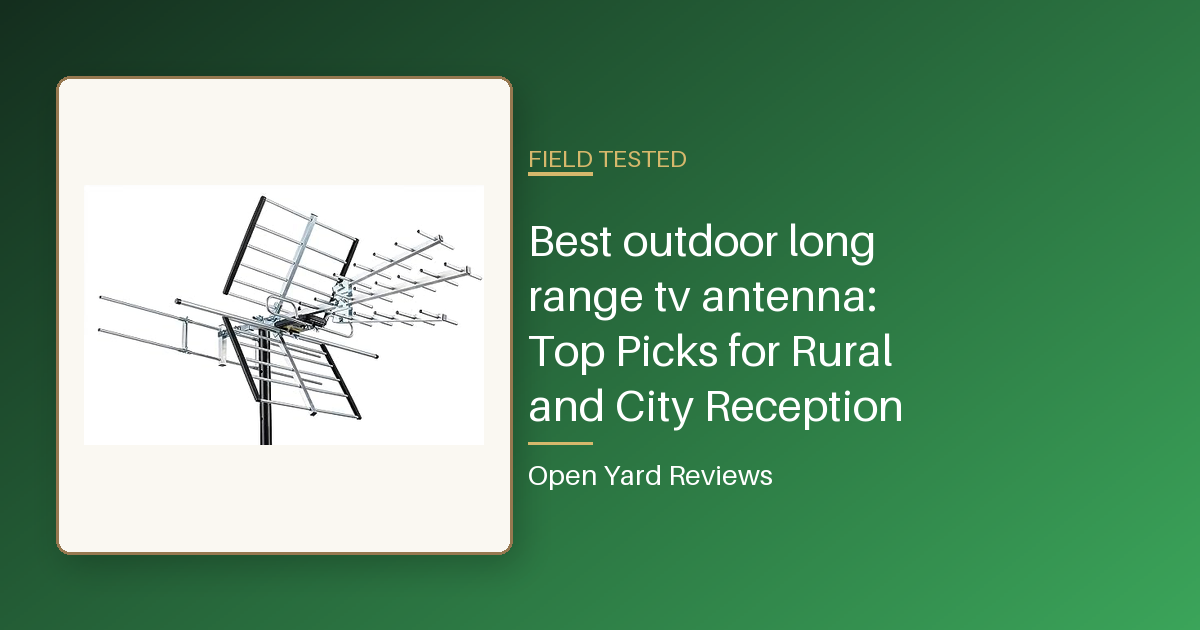
Getting clear TV reception outside city limits means choosing the right antenna. Weak signals and spotty channels are common headaches, especially if broadcast towers sit miles away.
This guide focuses on antennas built to reach distant signals, even through tough weather. If you live in a rural area, need local news, or just want free HD channels without cable, the picks here are for you.
Each antenna was researched for real-world performance, not just flashy specs. We cut through marketing claims to focus on what actually works when mounted outdoors.
Every antenna listed can handle long-range reception, but differences in build quality, signal stability, and installation make a big impact. The winner stands out for consistent channel pull, simple setup, and strong customer satisfaction.
Scan the takeaways for quick advice, compare specs in the table, and use the buying guide to avoid common mistakes. The FAQs tackle real questions buyers search for, so you get straight answers.
Our overall best pick: PIBIDI Outdoor TV Antenna, Long →
| Product | Range | Installation | Supported Formats | Includes Cable | |
|---|---|---|---|---|---|
| PIBIDI Outdoor TV Antenna, Long | Up to 80 miles (200 miles with booster) | Outdoor or Attic | HD, 4K, VHF/UHF | No | See on Amazon |
| GE Outdoor HD Digital TV Antenna | 70 miles | Attic or Outdoor | HD, 4K, 8K, ATSC 3.0 | No | See on Amazon |
| Five Star TV Antenna Indoor/Outdoor Yagi Satellite HD | Up to 200 miles (with booster) | Indoor or Outdoor | HD, 4K, FM | Yes | See on Amazon |
| Five Star Outdoor HDTV Antenna up to 200 Mile Long Range | Up to 200 miles (best up to 80 miles) | Attic or Roof | HD, 4K, ATSC 3.0 | Yes | See on Amazon |
| Five Star Outdoor HDTV Antenna up to 200 Mile Long Range | Up to 200 miles (best up to 80 miles) | Attic or Roof | HD, 4K, ATSC 3.0 | No | See on Amazon |
PIBIDI Outdoor TV Antenna, Long
This antenna stands out for its quick, tool-free setup and compact build, making rooftop or attic installation manageable for anyone. Reception is strong for both UHF and VHF, with over 65 channels picked up immediately when aimed toward local towers.
Owners in rural areas report clear picture quality from towers as far as 80 miles, and the antenna holds up well in windy and stormy conditions. Range claims are optimistic.
Despite paperwork promising 200 miles, real reception tops out around 80 miles unless you add a signal booster. Even with clear line of sight, signals from 100 miles or more remain elusive.
The antenna is lightweight, but the instructions are limited to diagrams and may confuse those new to antenna assembly. Performance is consistent for local channels and major networks.
It’s a solid option for replacing unreliable indoor antennas or for homes with spotty internet wanting a backup. Skip this if you need high gain for stations over 120 miles away or detailed written instructions for setup.
Holds up
- Quick, mostly preassembled setup
- Pulls in 65+ channels from up to 80 miles
- Handles tough weather and wind
- Works well for rural homes
- Supports HD, 4K, and VHF/UHF
- Lightweight for easy mounting
Watch for
- Range over 100 miles requires a signal booster
- Instructions are diagram-only and sparse
- No written step-by-step guide
GE Outdoor HD Digital TV Antenna
This antenna pulls in major network channels like ABC, NBC, CBS, FOX, and more from distances up to 60 miles, with consistently clear HD picture and sound. It thrives in suburb and rural setups, handling splitters for multiple TVs and working well even when installed in attics where space is tight.
Assembly takes patience, as instructions are small and vague, but the antenna is lightweight and manageable once you figure it out. Reception is noticeably better than flat indoor models and rabbit ears, especially for stations that are hard to reach.
Some owners report picking up 64 channels indoors on the first try, though you’ll hit peak clarity and performance outdoors or in the attic. The antenna supports ATSC 3.0 and future-ready formats, so you’re set for coming tech upgrades.
There’s no booster included, but it works well without one for homes within 70 miles of towers. Durability is the main concern.
The build is light, which makes attic mounting easy, but it may not withstand high winds or harsh weather if exposed. You need to supply your own coaxial cable, and rotating the antenna to target distant stations can make some channels drop out.
Skip this if you live farther than 70 miles from broadcast towers or need a heavy-duty, permanent roof install.
Holds up
- Pulls in 60+ channels from up to 70 miles away
- Works well in attics and tight spaces
- Supports HD, 4K, 8K, and ATSC 3.0 formats
- Handles multiple TVs with splitters
- Lightweight and easy to install
- Lifetime replacement and US-based support
Watch for
- Instructions are small and unclear
- No coaxial cable included
- Build may not withstand high winds outdoors
Five Star TV Antenna Indoor/Outdoor Yagi Satellite HD
This antenna’s Yagi build stretches for stability and promises up to 200 miles of reception, with a smart chip for noise reduction. It’s weatherproofed against wind and rain and comes bundled with a mounting pole and 40 feet of coax, making setup on roof, attic, or mast straightforward.
The package is mostly preassembled, but full assembly is required and instructions aren’t detailed, so expect to spend some time getting it right. Reception depends heavily on local conditions.
Owners in areas with clear line of sight to towers have pulled in dozens of channels, but those farther away or facing obstacles need a signal booster to reach advertised ranges. The antenna is compatible with FM radio as well, expanding its use for rural setups.
The lightweight build holds up in moderate weather, but you need to secure it well for high winds. The biggest trade-off is range reliability.
Without a power booster, actual reception falls short of the claimed 200 miles. Assembly can confuse first-timers, and some elements need careful positioning.
Skip this if you expect plug-and-play results at extreme distances or need detailed instructions for setup.
Holds up
- Extended Yagi design improves signal stability
- Weatherproof and lightning protected
- Includes mounting pole and 40 ft coax cable
- Receives FM radio and TV signals
- Works indoors and outdoors
- Preassembled parts speed up installation
Watch for
- Actual range without booster is much less than 200 miles
- Assembly instructions lack clarity
- Needs clear line of sight for best performance
Five Star Outdoor HDTV Antenna up to 200 Mile Long Range
Owners report picking up between 58 and 70 channels in suburban and rural setups, with clear HD and 4K signals for local and major networks. Installation is straightforward, and the included 40 ft RG6 coax cable makes attic and rooftop mounting easy.
Even with splitters, the antenna performs well across several TVs, and reception remains stable during spring and summer foliage. Performance depends on distance and obstacles.
Without a booster, channels above 80 miles come and go, and some days you may lose signals entirely. Assembly is easy if you’ve handled antennas before, but the build is delicate and can arrive with factory defects or poor soldering.
Repairs can improve performance, but not everyone will want to troubleshoot or solder connections. The antenna’s size is manageable, and it looks decent compared to older models.
It’s a solid upgrade for cable cutters and rental properties, but skip it if you need guaranteed long-range reception or strong build for harsh outdoor weather. UK buyers should avoid it, as it’s not compatible with DVB-T and DVB-T2 formats.
Holds up
- Pulls in 58-70 channels from up to 80 miles
- Multi-directional for picking up multiple stations
- Easy to install with included mounting bracket and cable
- Works well with splitters for multiple TVs
- Supports HD, 4K, and ATSC 3.0
Watch for
- Build is delicate and can have factory defects
- Some channels above 80 miles drop out without booster
- Not compatible with UK broadcast standards
Five Star Outdoor HDTV Antenna up to 200 Mile Long Range
This antenna’s lightweight, compact design makes attic or roof installation quick, and it’s easy to mount on existing satellite posts or run to multiple TVs. Owners pulling in stations from 30-50 miles away get solid signals on ABC, NBC, CBS, FOX, PBS, and more, including ATSC 3.0 feeds.
Assembly takes about 15 minutes, and the antenna picks up 25+ channels right out of the box sitting indoors before final mounting. Reception is consistent for local and major networks, with clear picture quality and more channels than older or smaller antennas.
Owners report picking up 60 channels and replacing much larger legacy antennas. It’s sturdy enough for most weather, but the mount and pole are less strong and can bend in strong wind or under heavy loads.
Performance drops for VHF channels if there’s interference from household electronics, especially CFL lights. Range claims of 200 miles are optimistic.
Without a booster or rotor, actual reception maxes out around 80 miles. It’s a good fit for cable cutters and homes with existing coax runs, but skip it if you need guaranteed reception at extreme distances or rugged mounting hardware for exposed sites.
Holds up
- Quick 15-minute assembly
- Pulls in 60+ channels from up to 80 miles
- Lightweight for easy attic or roof install
- Supports HD, 4K, and ATSC 3.0
- Works with existing satellite posts and coax
- Handles multiple TVs
Watch for
- Mount and pole are less sturdy than the antenna
- Performance drops for VHF channels with interference
- Range above 80 miles is unlikely without booster
1.True signal range
Manufacturers often exaggerate range claims. Look for antennas proven to pull clear channels at 60 to 80 miles, not just in ideal conditions. Avoid falling for 150 or 200 mile specs unless you have a direct line of sight and no interference. Real-world range is more important than marketing numbers.
2.Signal stability
Consistent signal matters more than peak channel count. An antenna that drops channels during weather changes or at night is a headache. Check for antennas that hold steady reception over weeks of use, especially in rural or wooded locations. Avoid models with frequent complaints about lost signals.
3.Installation and mounting
Easy installation saves hours and frustration. Choose antennas with clear instructions, strong mounting hardware, and flexible placement options (attic, roof, pole). Many buyers overlook mounting compatibility, leading to poor reception or costly adjustments.
4.Weatherproofing and durability
Outdoor antennas face rain, wind, and sun. Solid build quality and sealed connections prevent rust, water damage, and signal degradation. Avoid flimsy models that crack or corrode within a year. Longevity matters most for rural or exposed locations.
5.Amplification and booster options
Some antennas need amplifiers to reach distant towers, while others perform well without them. If you plan to use a booster, check compatibility and power requirements. Don’t assume every antenna includes a built-in amplifier; missing this leads to weak reception.